

We all love cats very much.
But, unfortunately, sometimes our human bodies cannot react adequately to these animals – notably, annoying allergic reactions.
So what should people with allergies do? Can they have and live together with cats?
It turns out that they can. Still, there are some breeds of cats that may be suitable for people with allergies.
Looking ahead, we would like to say that 100% hypoallergenic cat breeds do not exist – proven by the AAFCA (American Foundation for Asthma and Allergy).
However, there are some breeds that have lower allergen levels than their other counterparts.
But one thing at a time.
And so, here’s our list of hypoallergenic cat breeds!
10 Hypoallergenic Cat Breeds in One Video
Are There Any Cats That Aren’t Allergic?

There is an opinion that some cat breeds are considered hypoallergenic or low-allergenic cats. This is because they produce fewer allergens than others.
All cats produce several proteins that cause or can cause allergies in humans.
Actually, such proteins are part of the biological activity of cats and occur in the saliva, skin, urine, and anal glands of these animals.
At least eight such proteins are known and are recognized by international organizations such as the World Health Organization (WHO) and the International Union of Immunological Societies (IUIS):
- Fel d1 Uteroglobin;
- Fel d2 Serum albumin;
- Fel d3 Cystatin;
- Fel d4 Lipocalin;
- Fel d5 Immunoglobulin A;
- Fel d6 Immunoglobulin M;
- Fel d7 Lipocalin;
- Fel d8 “Latherin-like” protein.
The most common protein that is actually an allergen for humans is Fel d1.
It has been proven that 90-95% of people who are prone to allergies have a sensitivity to Fel d1.
The second most common allergen is Fel d4. It is found in about 60% of cases (according to studies).
Now let’s get back to the question – are there completely non-allergenic cat breeds?
Naturally, it would be strange if some cats did not produce Fel d1, Fel d4, or other types of proteins. Apparently, this was not nature’s intention.
However, as they say, “the devil is in the details”. Is it a myth?
Still, some cat breeds and even their specific individuals can produce smaller amounts of these proteins.
And by the way, hair length is not an indicator of the allergenicity of cats.
We will talk about these non-allergic cats below.
Tip from Murmeo. If you suffer from allergies, it would make sense to check saliva or fur for the presence and amount of Fel d1 before taking home a cat.
First, a Little Infographic

1.Siberian cat

Although their glamorous long fur requires a little more attention than other cats, you may not have to worry too much about sneezing and itching from allergies.
Siberian cats are irresistible for many reasons, including their playfulness and reduced allergen production.
This breed is considered quite ancient. Cats similar to Siberian cats were first mentioned in publications in the 16th century. At that time they were called Bukhara cats. They could be found everywhere in the Russian kingdom.
The hair of the Siberian cat is long and heavy, with a dense undercoat that becomes thicker when it is cold.
The Siberian breed of cat is affectionate and intelligent.
These cats are also attracted to water, sometimes throwing toys into it or playing with it.
Despite their large size, Siberians are quite agile and can easily jump on bookshelves or on top of cabinets.
And if you’re also a big-breed lover, this is a great option. After all, this cat is just in the top 10 largest cat breeds.
2.Balinese

Because this smart, energetic cutie produces slightly less Fel d 1 and has a single coat, she is often an excellent choice for people with mild cat allergies.
And so, the Balinese cat.
This is a long-haired domestic cat breed with Siamese coloring and sapphire blue eyes. The breed was recognized by the Cat Fanciers Federation (CFA) in 1961.
The breed resulted from a spontaneous genetic mutation in purebred Siamese cats that caused the cats to develop a longer coat type.
Balinese are known for their intelligence, friendly, inquisitive, playful character, and striking beauty. And they are considered one of the most sociable breeds with people.
However, they can be quite demanding and loud.
3.Bengal

The Bengal, with its unusual short, spotted fur, looks like a small feral cat.
It doesn’t shed as much as other breeds, which is good for allergy sufferers. In fact, that’s why we also included it in our list of anti-allergy cats.
Bengal cats are beautiful, intelligent, and wild animals. And also considered the most active of all cat breeds.
This domestic breed is a hybrid of domestic cats, the spotted Egyptian Mau and the Asian leopard cat.
In 1983 the breed was officially recognized by the International Cat Association (TICA).
By the way, you can read who TICA and other worldwide felinological organizations are in our detailed article.
Bengal cats are known to love water, a trait most domestic cats do not have.
You may have to be careful not to turn your aquarium into a fishing pond. Hopefully, with Bengals, you won’t have a problem with how to bathe them and still survive.
This breed should get along well with dogs and other cats. However, if you have hamsters or guinea pigs, cats can turn on their hunting instincts. It is best to keep Bengals separate from their natural prey.
4.Burmese

The Burmese cat is another representative of hypoallergenic cats.
Most modern Burmese are descendants of one cat named the Wong Mau, which was brought from Burma to America in 1930.
The breed was recognized by the Cat Fanciers’ Association (CFA) as a new breed in 1934 and was accepted for registration in 1936.
The coat of Burmese cats is short and fine, with a glossy, silky sheen. These cats require minimal care and do not shed much.
It is very important to keep cats of this breed active.
Burmese are playful and energetic and feel best in active families who want to play and socialize with their pets. In addition, these cats lend themselves well to training.
Burmese cats are compatible with other pets and children by nature.
5.Colorpoint shorthair
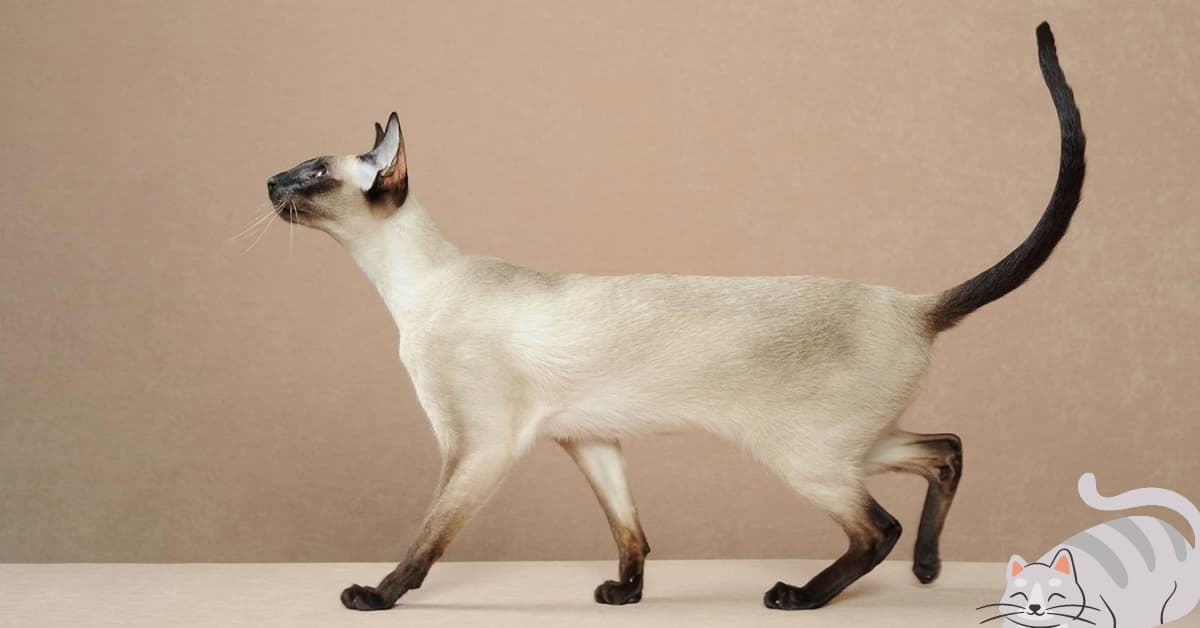
The colorpoint can also be great for allergy sufferers.
The Colorpoint Shorthair is a Siamese cat of a different color, that is, a non-traditional color.
The breed was bred from the Siamese cat and then crossed with the red American short-haired cat to get a new color.
Over time, other non-traditional colors were created.
The breed was recognized by the Cat Fanciers’ Association (CFA) in 1964. However, TICA considers the Colorpoint a variety of Siamese cats, not a separate breed.
These cats are sociable, friendly, and affectionate, eager to follow their owners around the house.
Colorpoints are usually characterized by their loud meows, which they use to “talk” to anyone who will listen.
These cute pets are sure to reach for all the warm places and blankets, especially during the cold winter months.
6.Cornish Rex

The Cornish Rex breed can also be classified as a hypoallergenic cat.
Some people believe that the short, wavy coat of the Cornish Rex does not emit dander as much as long-haired cats or cats with thick coats.
A strikingly unusual and surprisingly elegant cat, the Cornish Rex is a curly-haired cat breed with a reputation for being an active and sociable family member.
These cats tend to be very intelligent and love to be the center of attention.
7.Russian Blue Cat

The Russian Blue is generally a well-balanced cat breed that may be suitable for people with mild cat allergies.
Their plush, shimmering fur doesn’t shed too much and usually requires only weekly grooming.
The origin of modern Russian blue cats comes from Russia. Europeans liked them for their excellent rat-catcher qualities, for their unusual color and double, “plush” coat.
In 1893 the English breeder Karen Cox brought from Arkhangelsk a pair of blue kittens, which began their selective breeding.
This breed is known for its love of active play. Most Russian Blue cats are excellent family members, get along well with other pets, even dogs, and are good friends with children.
However, it is noted that this breed can be quite skittish compared to other breeds.
8.Siamese

It is assumed that the popular Siamese cat is also a low-allergen breed of cat. However, there is no definitive scientific evidence for this.
These curious cats have a low-maintenance coat, do not shed much, and require only weekly attention.
Siamese cats are thought to be descended from sacred temple cats in Siam, now called Thailand. They originated in the United States in 1878 when the American president received a Siamese as a gift from the American consul in Bangkok.
The Siamese cat has a very distinctive appearance, distinguished by its thin, long, trumpet-shaped flexible body and long wedge-shaped head.
Siamese cats are known to be one of the loudest cat breeds.
This breed fits in well with families with children and they are dog friendly. However, young children will need to be taught how to handle the cat properly so as not to provoke their defensive reaction.
9.Sphynx cat

Of course, in our list of hypoallergenic cat breeds, we have to mention the Sphynx.
Although sphynx cats are often referred to as “bald,” they do have fine, fluffy down that feels almost suede when stroked.
Like all cat breeds, Sphynx cats produce dander and licks – that is, they release allergens. But if you bathe them more often-which a cat needs anyway-the presence of dandruff can be minimized.
Sphynx cats are loyal and full of love for their owners.
These cats with long ears will be happy to entertain for hours and also don’t mind having a mate.
If you suffer from allergies, be sure to keep this breed in mind.
10.Javanese

And rounding out our list of the most hypoallergenic cat breeds is the Javanese cat or Javanese.
These cats have no undercoats, which means they don’t shed much and only need weekly grooming.
Thus, they spread fewer allergens, which can have a positive effect on people with mild allergies.
It is an artificial breed bred in the United States by crossing the Balinese cat with the short-haired colorpoint cat.
The resulting Javanese kittens look like Siamese cats, but their fur is longer and they have different colors.
The Javanese breed has a long, silky coat of different colors (unlike true domestic Javanese cats, which have short coats).
The breed is a very agile, intelligent, and hardy cat.
Now You Know More About Hypoallergenic Cats
Hopefully, you now know which breeds of cats are least likely to cause allergies.
However, before you take a pet home, it’s best to consult your doctor.
Remember that hypoallergenic cats are not 100% allergen-free in dander, saliva, or fur.
Frequently Asked Questions
The article partially used materials:
1. Resource https://www.petmd.com
2. Resource https://www.dailypaws.com
3. Images: unsplush.com
Murmeo link to the article: https://murmeo.com/en/10-hypoallergenic-cat-breeds/


