

Surely most of us know that our adorable furry feline friends hide formidable predators.
However, cats have evolved not only as predators but also as victims of larger predators.
And while cats are some of the most efficient hunters in the world, they still have a healthy self-preservation instinct. After all, they too can be eaten by someone with bigger teeth and claws.
No matter how safe their home is, our cats are programmed to avoid predator attacks.
This behavior manifests itself in many different ways – that’s why cats like to hide.
Many cats like to stay on high ground (to see their surroundings and avoid ambushes). They also like their litter boxes for natural needs to be in secluded corners only.
However, the first line of defense for a cat who doesn’t want to become someone’s dinner is to be undetected in the first place.
Today we’ll talk about why cats hide and their favorite places.
Table of Contents:
- Reasons why cats like to hide
- What kind of hiding places do cats like?
- Safe cat hiding places (list)
- Dangerous places for cats in our home
- How do you find a safe shelter for cats?
Why do cats like to hide?

Here is a list of known reasons why cats hide:
- the stress of adjusting to a new home;
- fear (neighborhood of other animals, strangers, natural phenomena);
- diseases;
- games.
When a cat finds a good hiding place, they feel safer and more comfortable than in the outdoor space.
It’s no wonder they like to find places in our homes that hide their whereabouts.
They can snooze in peace and dream of catching a mouse rather than being a mouse.
In their little cat “cave” (whether it’s a box, a bag, under the bed, or hidden in a closet) a cat can quickly take over a very small area, fill it with their scent, and create a safe place for themselves.
Cats living in homes with multiple people, small children, and other animals will often seek out these safe places to “be alone”, which we ourselves need from time to time!
In addition, shelters of all kinds are very important for cats who are not familiar with their environment or are just beginning to socialize with people or animals.
In such cases, this is where cats need a safe place. Being out in the open and therefore vulnerable can be stressful and frightening for a cat.
It is considered normal that under-socialized kittens will hide under, say, a bed.
Actually, this is why we feel that a big help in cat adaptation would be to provide them with safe hiding places.
This will help your furry pets adjust to a new home or new people and be happier.
Keep in mind that a cat trembling under the bed with fear is completely inaccessible. All attempts to get it out may prove unsuccessful for all involved in the process.
Therefore, it will be preferable to block access to the bed or behind the same sofa. But of course, alternative shelter will need to be provided.
Cat hiding options
You can come up with several shelter options:
- a cot in one corner of the room;
- A cardboard box for the cat or kitten to observe the situation;
- Allocate a completely separate room for temporary accommodation, such as a bathroom.
All of these things allow the cat to be in the role of observer until it is comfortable enough in your home.
Shelters around the house can also help keep the peace in multi-cat households – if you live in the private sector.
Cats who are prone to being chased or bullied by the more dominant cats (or dogs) in the house will also appreciate safe places to hide.
While it is necessary to work on improving those relationships where aggression between animals occurs in your home, providing safe hiding places can make a big difference.
These shelters will provide your kittens with extra space and promote peaceful coexistence with other animals.
What kind of hiding places do cats like? The most popular places

Whether your cat is hiding for pure pleasure, adapting to a new environment or people, or taking a break from socializing with other creatures in your home, all cats like to hide in different nooks and crannies.
In fact, here is a list of places and hiding places where cats like to hide.
In the closet

When cats are scared, it’s very common for them to flee to the bedroom.
“It smells strong in there and often smells just like the owner,” says Ingrid Johnson (certified cat behavior consultant).
The bedroom closet is attractive because it’s dark. It’s also because it’s full of soft items of clothing, and there’s a chance to climb up high: “Some cats like to climb up and examine things from above,” Johnson reminds us.
Behind the dresser

On the other hand, some cats may like to hide underneath.
“They can’t jump well or they just don’t like heights,” the counselor comments.
This can often apply to cat breeds with short legs.
If your dresser is set back slightly from the wall, this can be an attractive hiding place for your cat.
Some animals even slide the dresser drawer out the back and climb inside. But be careful that your pet doesn’t get stuck in there.
If you prefer to keep your pet away from this area, you can scare them away with citrus, peppermint, or cinnamon scents.
Under or over the furniture
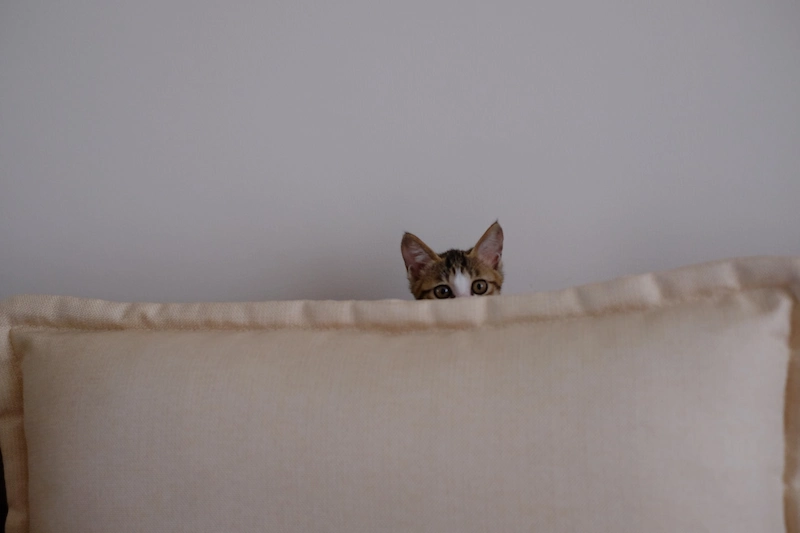
Of course, the main hiding place in your bedroom is under the bed itself.
You can probably observe cats hiding under couches or chairs in case of danger.
Most cat behaviorists agree that this is a great hiding place. The key is to make sure it is safe – a chair or sofa with retractable parts can be quite traumatic.
Cats should be “discouraged” from exploring nooks and crannies in such dangerous places, as moving parts can injure them.
Next to a heater or radiator
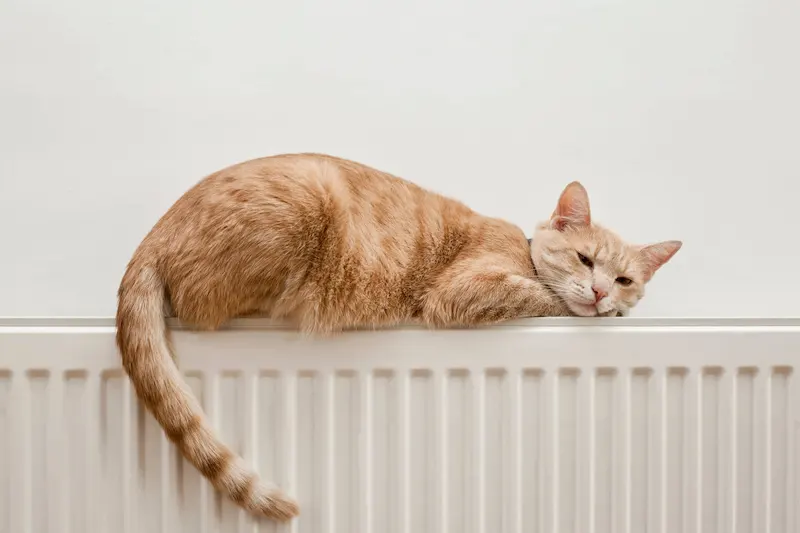
Another common trait of all cat shelters is the desire to seek warm places. This is especially true during the cold season.
Of course one of the warmest places in your home is the radiators or heater. Our animals quite often adapt to a narrow radiator if there turns out to be almost dried things there.
Inside the cardboard boxes
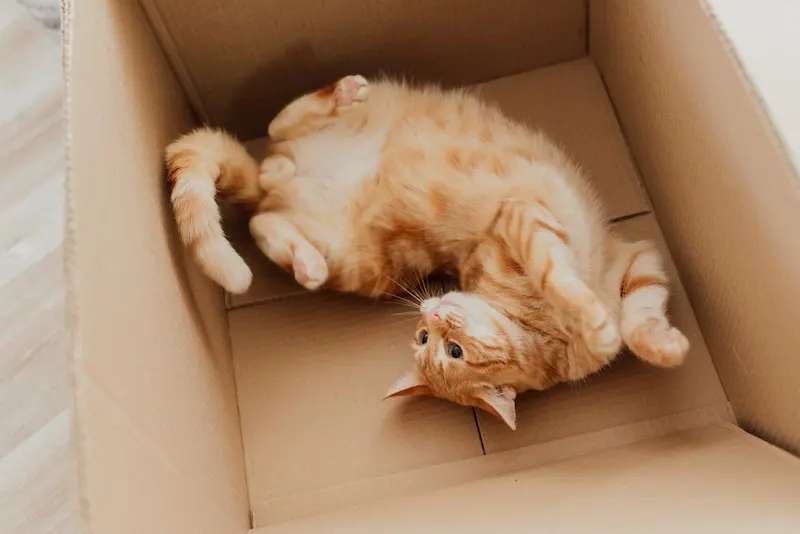
Oh, those cardboard boxes. They somehow magically and naturally attract all cats to them.
And there’s a hypothesis for that.
“Cardboard boxes help cats regulate their body temperature without expending energy,” Johnson says.
Cardboard boxes are a great place for cats to hide.
You can use them as an alternative to hiding places your cats shouldn’t be by decorating them with familiar bedding, treats, catnip, or toys.
On a tile or similar cool floor
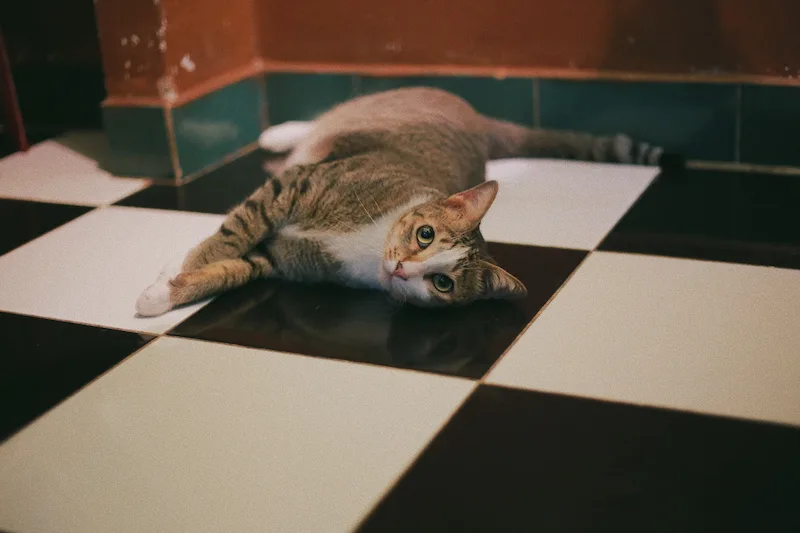
It has been noted that this is a popular hiding place for sick cats or when it is hot indoors.
But there may be another reason as well.
When cats have a fever, are vomiting, or are near death, cats will seek coolness rather than warmth.
If they are lying in a corner on a cooler floor, it could be a sign that your cat needs to be seen by a veterinarian.
Safe hiding places for cats (list)

If you’re looking for your kitty, try checking one of these common places.
Here is a list of potentially safe hiding places where a cat, cat, or kitten might be hiding:
- inside cardboard boxes or shoe boxes;
- in the corners of restrooms;
- under beds;
- on the floor behind curtains;
- inside a bed or sofa;
- in the bathroom sink;
- behind warm appliances such as a dryer or refrigerator;
- behind or under furniture;
- inside empty grocery bags;
- inside suitcases, backpacks, and briefcases;
- under potted plants or under Christmas trees;
- near bushes or under low trees in the yard;
- under the porch.
Dangerous places for cats in our home
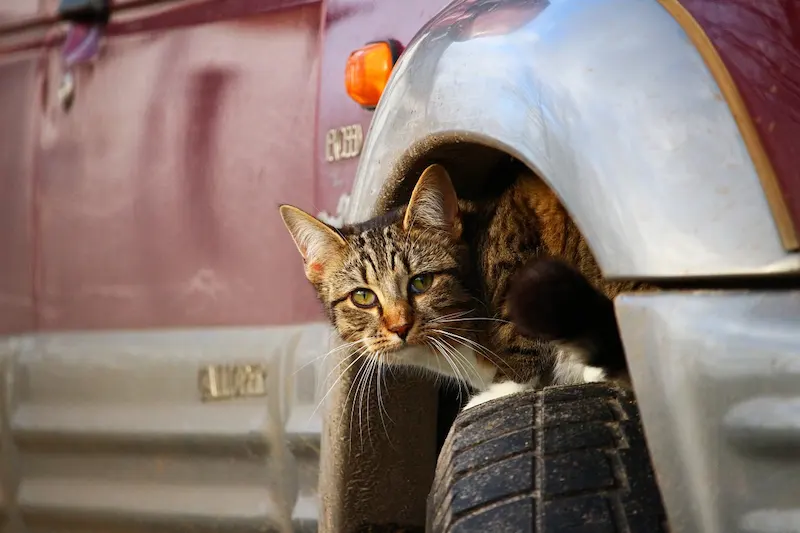
It is known that cats can be attracted to more unexpected places that can be traumatic or potentially life-threatening.
Inside the appliances
A particularly dangerous hiding place for cats is your washing machine. Therefore, it is always important to check for stowaways before you start loading laundry.
Other appliances can also pose a danger. These can include, but are not limited to, your dishwasher, dryer, and refrigerator.
As a general rule, if the door has been opened, you should always perform a quick safety check before starting the machine or closing the door.
Under or inside the radiators
Cats love heat, which makes cookers, boilers, and wood cookers especially appealing. Remember these tips to protect your kitty:
- If your furnace has open nooks and crannies or a small space that a cat could crawl through, it is best to close them. However, be sure to consult a home heating specialist to make sure this modification will be safe.
- If the door of your wood cooker has been opened, always double-check before throwing wood and starting a fire. Ashes can stay warm for a long time, making them attractive to cats.
- Make sure there is enough clearance around the heaters to prevent the cat from getting trapped and stuck there.
In the garage
The garage is full of attractive hiding places for kitties, but it’s also full of unsafe things or places.
Cats can be exposed to harmful chemicals, dangerous equipment, and other car-related hazards.
Because of the heat of the engine of a car that has recently been started, cats will sometimes get under the bonnet and curl up on the warm engine block.
When you start the car again to drive away, they may be trapped there.
Similarly, a cat can hide under a car wheel – be vigilant.
If possible, try to limit the cat’s access to your garage altogether. It’s better for everyone!
In the moving parts of the chair or sofa
The dark interior of your chair or sofa may also be of interest to your cat.
And your furry friend may get hurt when you raise or lower the footrest or open/close the sofa.
Other dangerous places

There are a number of other dangerous cat hiding places that you should minimize or check regularly:
- plastic bags, which can cause choking;
- open drawers and cupboards that can cause pinching;
- elevated areas that could cause injury in a fall;
- toolboxes.
“To deter cats, deny access to dangerous areas, but don’t shout at them or pour water on them,” experts say. “This can only cause fear and ruin your relationship with your cat.“
Instead, use scents such as peppermint and citrus – cats don’t like them.
Also, be vigilant to make sure your cat doesn’t hide in places where they can fall from heights.
How to find a safe hiding place for cats
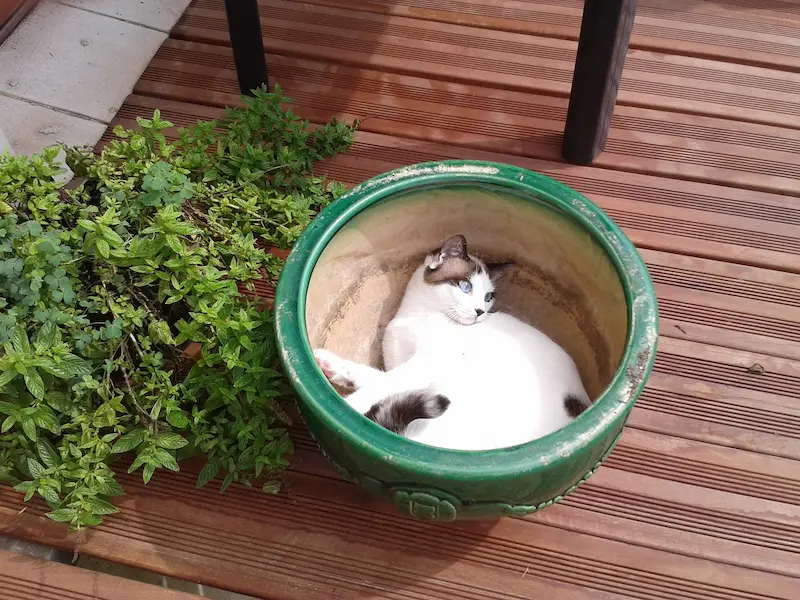
To prevent injury and keep your cat safe, it makes sense to follow your cat’s natural behaviour. Observe where your pet bridges to sleep or hide.
When arranging the perfect hiding place, just keep in mind the qualities of hiding places that cats are attracted to.
Find a quiet, dark location
One thing that is certain is that all cats like to hide in places where they will not be disturbed.
You can set up a cat hideout under the bed, behind the sofa, or anywhere else – look for secluded corners in your home.
Pick something closed
Cats are known to like enclosed spaces.
You can buy a cat house. And there is no limit to your wishes – it all depends on your budget.
However, there is nothing wrong with a simple cardboard box. Believe us, your pet will also appreciate this gesture and will sleep or hide there.
Make the place warm and cosy
Add a soft fleece blanket to make your pet’s space warmer and cosier.
If you can place the cot near a warm radiator or on a heated floor, that’s even better.
To summarise
“Any changes in your cat’s normal behavior – including a desire to hide that interferes with daily activities – could be cause for concern,” say cat behaviorists.
And we’re of the same opinion.
If your cat’s behavior is showing signs of hiding or has greatly increased, it makes sense to consult your vet.
Keep in mind that designated areas (hiding places) will help your cat feel more relaxed and safe.
Make your cat’s life as comfortable as possible, as it costs us very little effort.
What kind of hiding places do your cats prefer? Maybe you have some original places?
And that’s it for today 🐱.
Bye!


