

Of course, a cat’s breath is not going to smell like roses.
Especially since cats are inherently carnivores. After all, the main part of their diet is meat. And even more so, sometimes the meat is not the first freshness.
But when cat breath smells like death – it is time to think about it.
Bad breath in cats can be a concerning issue for us as pet owners, impacting both the feline’s well-being and the owner’s overall experience.
In this comprehensive guide, we delve into the various aspects of bad breath in cats, exploring its potential causes and, more importantly, providing practical insights on how to prevent and treat it effectively.
Join us on this journey to uncover the secrets of combating bad breath in cats and fostering a happier, healthier bond with your furry friend.
Table of Contents:
- Hygiene in cats
- What kind of smell (breath) should a cat have?
- What is halitosis in cats?
- Diseases that cause bad breath in cats
- Signs that your cat may need medical care
- How do you open a cat’s mouth?
- How do you get rid of bad cat breath?
Watch Our Video on Youtube
Hygiene in Cats
Cats take pride in their hygiene.
And we would certainly like to think that their constant licking and washing is done for our benefit. However, this is not the case 😺.
Feline grooming is a more ancient instinct than we realize – and all this beauty and cleanliness is not for our benefit.
The reason of cats washing is simple: they eliminate odors that could easily give them away to feline competitors, other predators, or prey.
Of course, being clean and odor-free is definitely a good advantage of owning a cat. Isn’t it?
Although there are a few reasons why a cat may not have a “sweet odor”, more on that later.
What Kind of Smell (Breath) Should a Cat Have?
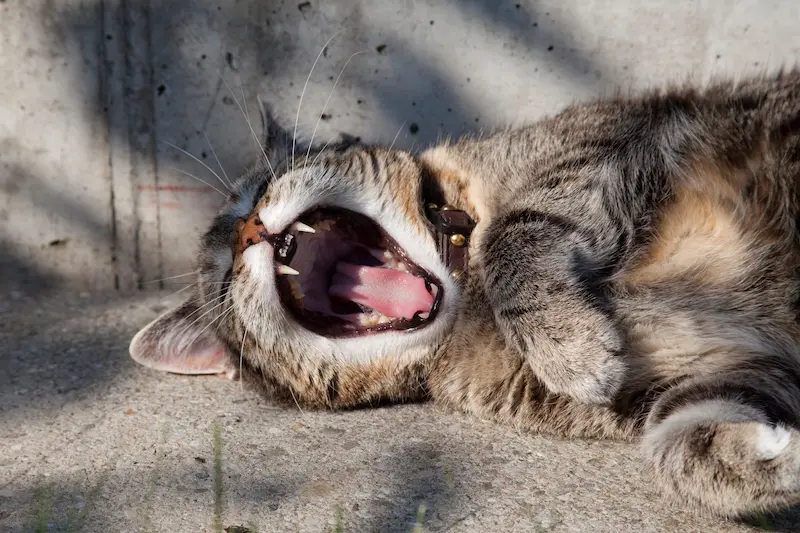
A healthy cat’s breath should be almost odorless.
It is mentioned that your cat’s breath should smell fairly neutral, and any foul odor is a sign of oral hygiene problems or other health issues.
A sharp fishy or rotten odor in cats’ mouths is almost always a sign of a problem.
What is Halitosis in Cats?
A putrid, pungent, unpleasant odor from a cat’s mouth has a scientific name – halitosis.
Actually, halitosis is the common name for all cases of bad odor coming from the mouth.
And yes, it also applies to humans….
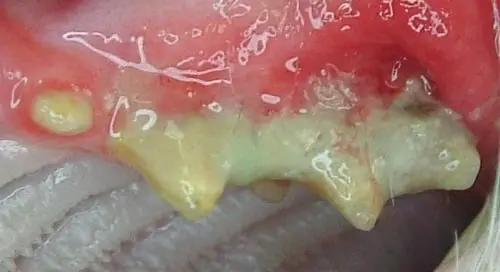
Bad breath is the result of odor-producing bacteria accumulating in your cat’s mouth.
According to International Cat Care, 85% of cats have some sort of dental disease, and it’s no wonder why.
A cat’s teeth and gums contain naturally occurring bacteria. As these microbes multiply and are not removed by brushing, they can form bacterial plaque on the teeth.
Due to natural minerals in your cat’s saliva, this film hardens and becomes tartar.
In turn, the remaining bacteria in the cat’s mouth, release stinky compounds after they break down the leftover food.
This not only causes bad breath; these bacteria can travel with the blood to various organs where they cause infections, often leading to heart and kidney disease.
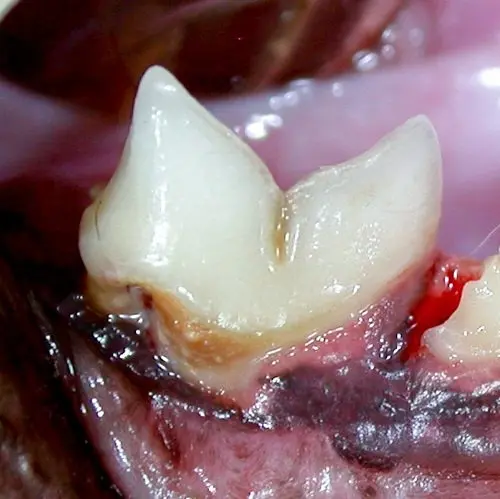
Tartar buildup also causes the gums to droop, which weakens the roots of the teeth. Eventually, those wobbly teeth fall out.
All of this is what leads to the not-so-scented odor from your pet’s cat’s mouth.
It is known that cats can also expose their teeth and gums to foreign objects.
For example, from the insects they catch and eat. And non-food items that can cause oral trauma.
In addition to these sources, cats still often vomit hairballs. (Hello, our favorite cat Malwa).
Imagine your breath if you couldn’t brush your teeth in the morning, especially after being sick…..
What causes halitosis in cats?
Causes of bad breath in cats can be:
- bacteria associated with dental plaque;
- tartar;
- decomposing food particles left in the periodontal pockets;
- persistent bleeding due to impaired coagulation;
- tissue necrosis (tissue dying off).
Contrary to popular belief, this foul odor is not affected by air in the lungs or stomach odor.
The most common cause of bad breath in cats is periodontal disease caused by plaque and tartar deposits.
Plaque bacteria attach themselves to the newly cleaned and polished tooth as soon as the cat starts salivating.
Within a few days, plaque becomes mineralized, forming rough tartar, which accumulates more plaque and causes inflammation of the gums (gingivitis).
As the plaque ages and gingivitis develops into periodontitis, the bacterial flora changes from good bacteria to destructive bacteria.
Diseases That Cause Bad Breath in Cats

It has been proven that the most common cause of bad breath in cats is dental problems, specifically periodontal disease.
Periodontal disease in cats
While breath odor can be from many things, veterinarians agree that periodontal disease is the most common cause of bad breath in cats.
Periodontal disease is an infection that results from the buildup of soft plaque on the surface of the teeth around the gums.
The bacteria in the plaque irritates the gum tissue. This plaque tends to continuously build-up, which can lead to infection of the bone surrounding the teeth.
In just a few days, plaque can mineralize and harden into tartar. This, in turn, provides a rough surface that makes it easier for more plaque to accumulate.
If periodontal disease is ignored, it can lead to tooth loss, bleeding gums, pain, and other problems.
To treat periodontal disease, your cat should have a professional dental cleaning at a veterinarian’s office.
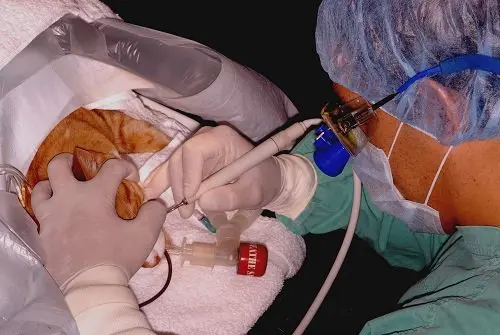
Your pet will be given general anesthesia.
After sedation, the veterinarian will remove plaque and tartar from the teeth and check for any diseased teeth that may need to be removed.
X-rays may also be taken.
Consistent oral hygiene can prevent a recurrence of periodontal disease. “Brushing your pet’s teeth every day is the best thing you can do,” veterinarians say.
Murmeo comment! We have no idea how to brush a cat’s teeth at home. Just opening the mouth is a problem for us. Of course, as an option, you can use retainer bags. But we don’t want to do it without an urgent need.
“I think the most important advice is to take your time and gradually move to brushing with a special toothpaste for cats,” says Dr. Jennifer Marzec of City Veterinary Clinic based in Chicago, USA.
“First the cat has to get used to you lifting its lip, then touching its teeth, then introducing the brush into its mouth, and finally brushing its teeth with the brush. If you proceed slowly and offer the cat some tasty treats, the chances of success increase.“
(For more brushing tips, check out these step-by-step videos from Cornell University’s College of Veterinary Medicine.)
If brushing isn’t possible, cats’ teeth can at least be rubbed with dry gauze or a washcloth to remove plaque, says a veterinarian.
Lymphocytic-plasmacytic stomatitis
In some cases, putrid breath is caused by a condition called lymphocytic-plasmacytic stomatitis.
In brief, it is an inflammation of the oral mucosa in cats. Feline stomatitis is a severe and painful problem that can sometimes be life-threatening for your pet.
It is known that stomatitis can be associated with feline leukemia virus, feline immunodeficiency virus, calicivirus, bartonella, or other infections.
By the way, stomatitis very often occurs precisely in kittens. Its basic symptoms are serious inflammation of the oral cavity, which causes an unpleasant odor and severe pain.
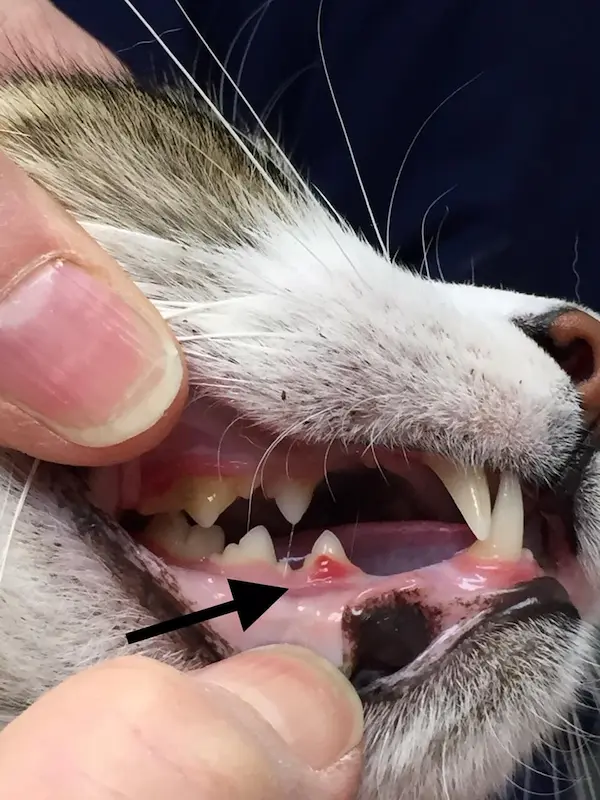
“Cats’ gums look like raw hamburgers,” veterinarians describe the disease. “Cats have sore, swollen, bleeding gums. It hurts when they open their mouths.“
Treatment may include cleaning and extraction of some or all of the teeth. Cats with this condition may also require antibiotics.
One common cause of stomatitis is specifically calicivirus.
Calicivirus is quite easily transmitted to other cats and is very common in areas with high concentrations of cats, such as shelters or veterinary clinics.
And here owners must vaccinate their cats regularly.
Mouth cancer
It is known that oral cancer can also cause bad breath. As the tumor grows, it can become infected and cause bad breath.
Cancer occurs if squamous cell carcinoma develops in your cat’s mouth. It can occur on any soft tissue, including the gum, tongue, palate, and tonsils. It usually causes bad breath and difficulty eating.
“Unfortunately, by the time squamous cell carcinoma (and other oral cancers) is diagnosed in cats, the prognosis is not favorable,” says the veterinarian.
Kidney disease
Sometimes bad breath signals a health problem that is not coming from the mouth.
According to veterinarians, if your cat’s breath smells like ammonia or urine, it could be kidney disease, which is not uncommon in cats 8 years of age and older.
In addition to bad breath, cats with kidney disease may appear lethargic, lose weight, drink more water, and urinate more frequently and in larger volumes.
If an animal has started to urinate in an inappropriate place, it is also possible to get rid of the urine odor.
This foul odor can mean that toxins are building up in the body.
Your veterinarian can examine your pet. You should get blood and urine tests to determine if there are any kidney problems.
Veterinarians mention that kidney disease can be managed with dietary modifications such as:
- minimizing phosphorus in the diet;
- ensuring that your cat is adequately hydrated (drinking);
- addressing secondary problems such as anemia or high blood pressure.
Keep in mind that the earlier kidney disease is diagnosed, the better the prognosis for your pet.
Diabetes mellitus
It is known that if your cat’s breath has a fruity odor, it may indicate diabetes. Additional signs can be if the animal drinks more water than usual, urinates more often, and loses weight despite a strong appetite.
Diabetes in cats can be treated with insulin.
Liver disease
According to veterinarians, in addition to bad breath, a cat with liver disease may have yellowing of the whites of the eyes or the skin of the ears or gums.
The cat may also be lethargic, have a poor appetite, vomit or diarrhea, drink, and urinate more frequently than usual. Treatment will depend on the cause of the liver disease.
Poor nutrition
Your cat’s diet has a direct impact on his breathing.
A poor diet with additives and hard-to-digest foods can definitely lead to poor breathing. A proper diet can improve gastrointestinal health as well as your cat’s breathing.
Signs That Your Cat May Need Medical Attention for Bad Breath

Here’s a list of the top signs that your pet may need veterinary help for bad breath:
- difficulty eating (refusal to eat);
- the cat’s unkempt appearance;
- vomiting, choking, drooling;
- inflamed or red gums;
- imagined pulling out of the mouth with the paw (as if something is in the way);
- fruity-smelling breath (possibly diabetes);
- Urine-scented breath (this could be kidney disease).
Difficulty in eating
This is one of the first signs of oral disease. In this case, the refusal to eat may be due to mouth pain rather than loss of appetite.
The cat may sit next to the food bowl, showing that it wants to eat; it may even start to eat. However, it then quickly abandons the food.
However, make sure that your pet’s bowl is clean enough and your pet is not squeamish about eating from it.
If you try to inspect the mouth, the cat will stagger back and of course, try to get away from you.
Malnutrition is a serious problem for cats. Even 24 hours without food can cause changes in liver function.
The cat’s unkempt appearance
Another sign that a cat has an oral problem is a lack of grooming. You’ve probably noticed what clean-cut animals cats are and how often they groom themselves.
If grooming is accompanied by drooling, the hair on the cat’s chin and chest may be dirty and wet. Pain in the mouth is one of the main causes of drooling.
The saliva may be discolored – brown or red due to infection or bleeding.
Vomiting, choking, drooling in a cat
This all suggests a foreign object in the mouth, on the tongue, or in the throat.
If the object is not immediately visible, or if you can see it but cannot remove it, the cat should be seen by a veterinarian immediately.
If a cat’s mouth is ajar and drooling or foaming, it may be a sign of rabies. The same condition can be seen in a cat with severe respiratory failure or cancer in the mouth.
How Do You Open the Cat’s Mouth?
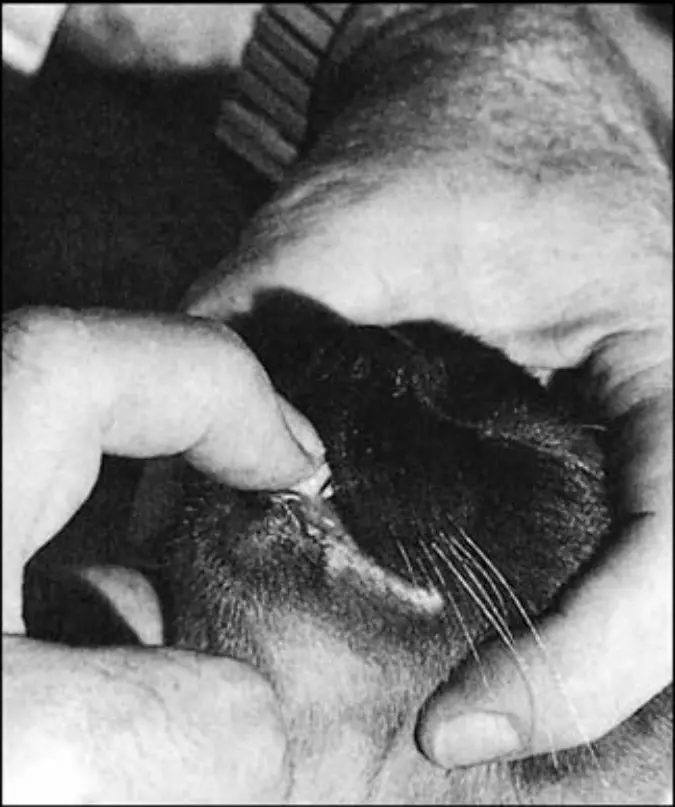
To open the cat’s mouth, grasp the curve of the cat’s muzzle across the cheekbones and gently press it.
Next, use the index finger of your other hand to press or pull down on the lower jaw.

How to Get Rid of Bad Breath of Cats: Home Remedies and Professional Advice

The goal of the treatment is quite simple: to rid your cat’s breath of bad odor.
If you have a kitten in the house, implementing a good oral hygiene plan will be quite easy, provided you are consistent and constant in this endeavor.
Periodic tooth brushing
Brushing your cat’s teeth is one of the most effective ways to prevent tartar buildup.
You should use a toothpaste made specifically for cats. You can buy such toothpaste at pet stores or at your veterinarian’s office.
It also makes sense to purchase a special cat toothbrush to make this task easier for both your cat and you.
Brushing should be done at least a few times a week, and ideally daily. And yes, this can be a challenge, especially during the training phase. But stick to your plan and most cats will learn to tolerate and accept brushing as part of their routine.
Annual dental checkup
It is also recommended that you have your cat’s teeth professionally cleaned by your veterinarian at least once a year.
Keep in mind that this procedure will require light anesthesia (sedation) for your cat. Anesthesia is needed not only to make it easier for the veterinarian to move around your cat’s teeth while he or she sleeps but also to get into hard-to-reach areas.
The procedure often involves removing hard-to-reach plaque and tartar that can build up under the gum line.
Your veterinarian may also recommend x-rays to look for broken or chipped teeth, a common occurrence in cats.
Avoid solid objects
Do not let your cat chew objects that are harder than its teeth.
It makes sense to offer chewable oral hygiene tablets. There are catnip chews and other dental treats that can help your cat keep his mouth clean.
Remedies for plaque and mouth odor
There are new products that you can add to your cat’s drinking water to reduce tartar and plaque buildup.
These include Dental Fresh, Pet Kiss Plaque, and other tartar removal liquids.
However, keep in mind if you are adding an additive to your pet’s water, make sure they will drink that water. It’s better to go without the additive than for your pet to completely refuse to drink. Alternatively, you can keep two bowls of water, one plain and one supplemented.
Other treatments
If your cat has periodontal or gum disease, your first goal is to treat the oral cause of bad breath specifically. A full oral examination under anesthesia is necessary to diagnose the cause and extent, and to treat it.
If the cause of bad breath is a systemic disease (see list above), your veterinarian will likely need to perform a diagnostic workup to determine the cause.
Once the cause is diagnosed and treated, regular at-home dental care should be established.
So what to do about bad smell in cats? To Sum it Up
First, periodically listen, or rather, “smell” your pet. However, the smell of lilies in the valley is not guaranteed.
Second, observe the cat’s behavior. Any changes or unusual behavior should alert you.
Third is of course an annual oral and dental exam by your veterinarian.
Murmeo comment! We usually have our cats examined at the time of their annual vaccinations. The vet always checks our cats’ mouths and teeth before vaccinating them. We advise you to do the same.
It should be remembered that, for example, the same gums are an excellent indicator of a cat’s health.
Well, that’s probably all for today. We hope our materials were useful for you and your pets. Share your thoughts, cases, and ideas in the comments – it will be informative for everyone.
And good luck to all.
Bye!
The article partially relies on materials from:
1. Book «Cat owner’s Home Veterinary Handbook (3rd edition)».
2. Source PetMD.
Murmeo link to the article: https://murmeo.com/en/bad-breath-in-cats/


